Jupiter-size planet survives death of Sun-like star
WD 1856 b orbits a white dwarf, the remnant of a Sun-like star, in a rare survival case.
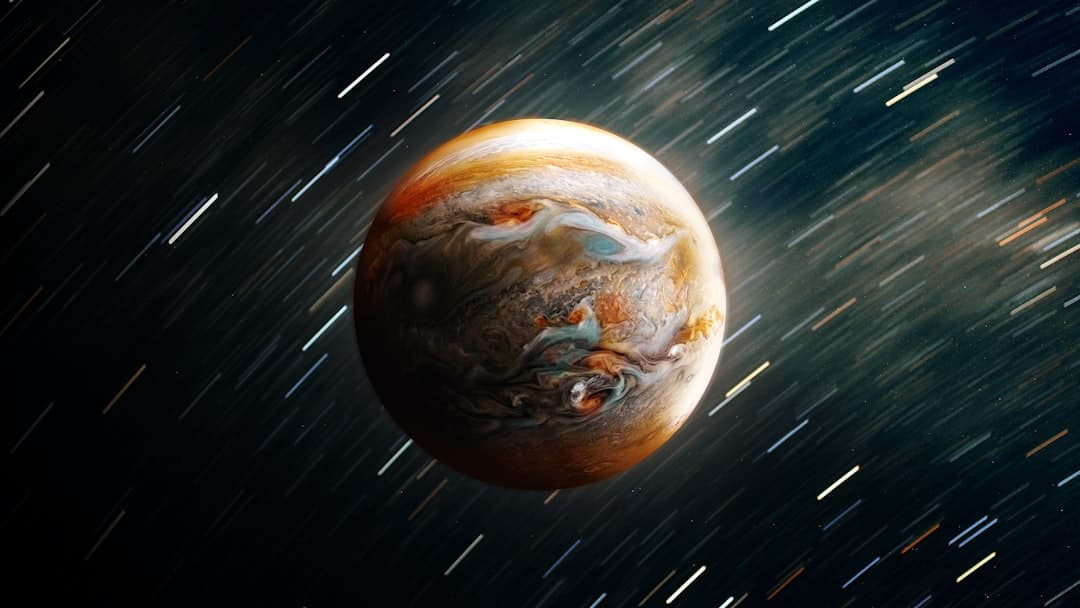
WD 1856 b is the only confirmed case of a planet that survived the death of a Sun-like star. It’s a Jupiter-size world orbiting a white dwarf—the burned-out remnant of a Sun-like star. Now, a team of astronomers has used the James Webb Space Telescope to take a closer look at this planet for the first time, and what they found makes an already strange system even stranger.
WD 1856 b was an accidental discovery. Astronomers pointed the TESS observatory at a sample of roughly 2,000 white dwarfs in 2020. These stars are the remains of a Sun-like star that have already gone through a red-giant phase, leaving behind an Earth-size body that’s primarily composed of elements like carbon and oxygen.
The TESS team was searching for small objects like comets or asteroids that might transit across the face of these dead stars. What they found in the WD 1856 system was a gas giant. “As soon as they looked at it, they said, okay, that’s weird,” said Christopher O’Connor, a theoretical astrophysicist at Cornell University and co-author of the recent Nature study on WD 1856 b.
The team’s findings provide new insights into the survival of planets around stars that have exhausted their fuel and shed their outer layers. The survival of WD 1856 b has significant implications for our understanding of planetary systems. The existence of this Jupiter-size planet around a white dwarf star raises questions about the formation and evolution of planetary systems.
How did WD 1856 b survive the violent process of its star’s transformation into a red giant and then a white dwarf? What does this mean for the potential for life on other planets in similar systems? The study of WD 1856 b and similar systems will continue to shed new light on the complex interactions between stars and their planets, and may ultimately help us better understand the conditions necessary for life to emerge and persist.
Source: Ars Technica