Panasonic’s PV-460 Camcorder Stabilized Shaky Videos
If you grew up in the 1980s or ’90s, you likely remember shaky home video footage, taken with a handheld camcorder , of family gatherings, vacations, and other events.
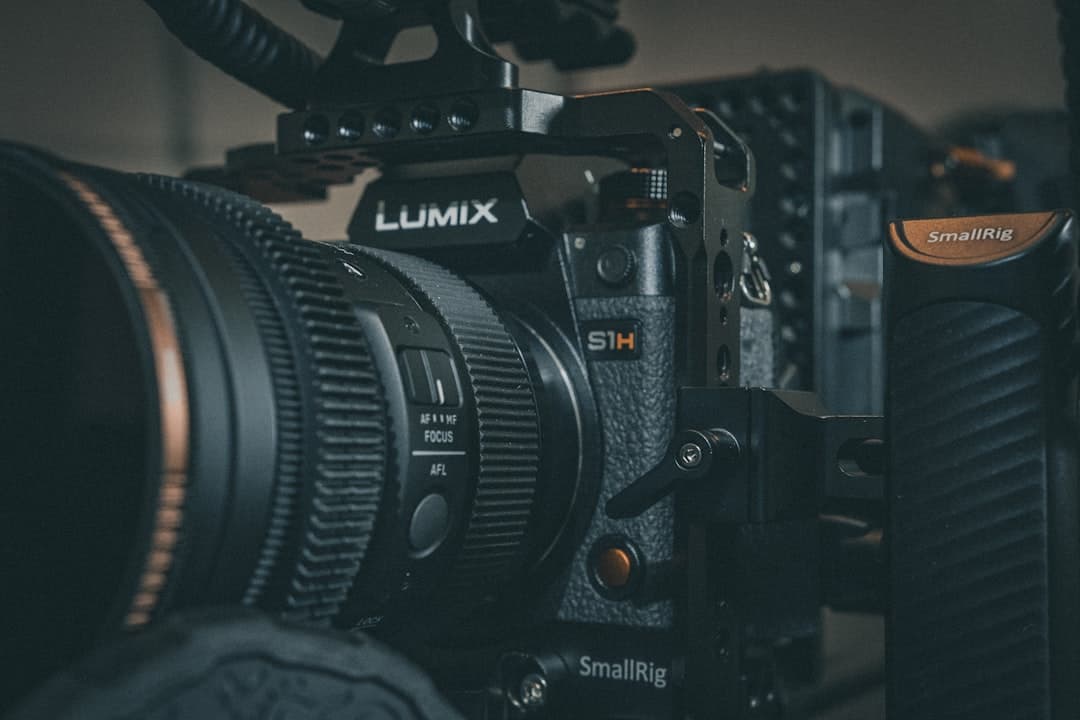
If you grew up in the 1980s or ’90s, you likely remember shaky home video footage, taken with a handheld camcorder , of family gatherings, vacations, and other events. Camcorders combined a camera with a video recorder . They included a rechargeable battery, a slot for a videotape, and a shoulder strap. Most were outfitted with an optical zoom lens and a small, articulating screen—a display mounted on a hinge that could tilt and rotate. The operator could check the screen to view what was being recorded. The user’s natural hand and body movements when filming led to jittery footage. The best way to get a steady shot was to place the camcorder on a tripod or a gimbal: a motorized stabilizer. There were fewer poor-quality recordings after Panasonic introduced its PV-460 VHS camcorder in 1988. It was the first video camera to include an optical image stabilizer, which compensated for movements. Stabilization features are now standard in today’s cameras including ones found in smartphones and drones. The PV-460 camcorder was honored as an IEEE Milestone on 9 July. The dedication ceremony was held in Kadoma, Japan, at the Panasonic Museum , which displays the company’s past products. The IEEE Kansai Section in Japan sponsored the Milestone. “The release of the PV-460 fundamentally transformed personal videography, enriching the way people captured travel, events, and family memories,” section members wrote in support of the Milestone nomination. Their proposal is available here . “Its image stabilization features democratized video creation by dramatically lowering technical barriers, allowing ordinary people to express themselves with newfound creative freedom,” they wrote. “Beyond the home, image stabilization technology found critical applications in specialized fields, contributing to advancements in areas such as educational media and telemedicine.” The history of camcorders Before the camcorder was invented in 1982, people filming events in the 1970s and early 1980s used two pieces of equipment: a video camera and a separate video cassette recorder (VCR), which were connected by a multipin cable. The camera was about the size of a toaster, and the VCR could be as large as a suitcase. To record, the person operated the camera with one hand and carried the VCR in the other or rested it on a shoulder. The cable transmitted the images from the camera to the cassette. The PV-460 was made possible by several groundbreaking innovations, according to the Milestone proposal, one of which dates back to the 1950s. In 1956 Italian manufacturer Durst released its Automatica , considered one of the first cameras to use automatic exposure technology. By combining a light meter with the camera’s internal mechanical systems, the technology removed the necessity of calculating exposure settings by hand when the lighting shifted or other conditions changed. The innovation enabled amateur photographers to take decent pictures. The next breakthrough technology—autofocus—was invented in 1973 by Norman Stauffer , a manager of research for Honeywell in Littleton, Colo. It uses a sensor, a control system, and a motor to focus on a selected area. The invention led to the development of early electronic autofocus cameras, which eliminated the need for photographers to manually adjust the lens. Stauffer received the 1990 IEEE Masaru Ibuka Consumer Technology Award for his invention. “The release of the PV-460 fundamentally transformed personal videography, enriching the way people captured travel, events, and family memories.” —Milestone sponsors U.S. inventor Jerome Lemelson is credited with developing technologies that underpinned the camcorder, according to MIT . In the 1950s and ’60s, Lemelson filed several patent applications related to video and audio recording devices. In 1980 he was granted patents related to a portable video camera system. In 1982 JVC and Sony used the technologies to develop what they called the camera/recorder, which became known as a camcorder. Sony released the first handheld camcorder in 1983: the Betamovie BMC-100P . It used the Betamax videocassette format and could record up to 3.5 hours of footage on 1.27-centimeter cassette tape. The operator rested the 2.5-kilogram camcorder on top of a shoulder to shoot footage. It sold for around US $2,000 at the time (roughly $33,400 today). The machine couldn’t rewind or play back tapes; it could only record. Other electronics companies including JVC soon introduced their own models using the VCR format, which eventually replaced Betamax. Over time, camcorders became more compact. But none of the companies could fix the shaky-footage problem. Solving a shaky problem A team at Panasonic led by researcher Mitsuaki Oshima took on the task of image stabilization: detecting and correcting small camera movements, referred to as camera shake , according to the proposal. Oshima, an IEEE life senior member, is now an honorary Fellow at Panasonic. “The movements that needed to be detected and corrected included horizontal, vertical, and rotational motions—specifically pitch, yaw, and roll,” the Milestone sponsors wrote. “Rotational motion, in particular, becomes the dominant factor affecting image stability during high-magnification shooting. Therefore, the development team focused on detecting rotational motion and began developing an angular velocity sensor.” An AVS, essentially a gyroscope, detects how quickly an object is changing its orientation in space. Sensors capable of detecting angular velocity were large and expensive at the time, making them unsuitable for consumer video cameras, the sponsors wrote. What was needed, they said, was a compact and inexpensive version. Oshima and his team built a high-performance, small, low-cost vibration-type gyroscope. The stabilization mechanism included a miniaturized sensor paired with an optical-axis correction mechanism. The mechanism adjusts the lens or image sensor to counteract physical shifting and vibrations, ensuring that the light path remains centered on the sensor—which is crucial for maximizing sharpness and quality, the Milestone sponsors wrote. “The system detects lens displacement caused by camera shake and immediately compensates for it, ensuring stable video footage,” they wrote. “As a result, the effects of camera shake are minimized, allowing users to capture smooth and steady videos with ease.” Without Oshima’s image stabilization technology, the PV-460 wouldn’t have been developed and released in 1988. The technology was patented and broadly licensed by other companies. It has become a standard feature in a variety of imaging applications. Awards and accolades The PV-460 gained instant popularity when it debuted in June 1988. It received rave reviews at that year’s Consumer Electronics Show . Panasonic received a 100 Award in 1989 from R&D World magazine for “the development of a VHS camcorder with an antishake mechanism.” Oshima’s research paper, “ VHS Camcorder With Electronic Image Stabilizer ,” and others are available in the IEEE Xplore Digital Library . To learn more about historical figures in engineering, IEEE Milestones, and IEEE History Center programs and events, check out The Institute’ s IEEE Tech History collection . IEEE Spectrum also covers aspects of tech history . Milestone plaque display The Milestone plaque is to be displayed on the ground floor of the Panasonic Museum, which is open to the public. The museum is located near the now-shuttered Panasonic research lab where the technology was developed. The plaque reads: “In 1988 the pioneering PV-460 camcorder equipped with image stabilization for enabling smooth and steady video capture was introduced by Panasonic. By pairing a miniaturized vibrating-structure gyroscope sensor with an optical-axis correction mechanism, the PV-460 eliminated the jitter caused by hand motion. Broad international licensing of this patented scheme made it a standard feature in film and digital cameras, smartphones, and related imaging devices.” Selected by the IEEE History Committee and endorsed by the IEEE Board of Directors , IEEE Milestones recognize outstanding technical developments around the world that are at least 25 years old. The Milestone program is administered by the IEEE history and heritage group .
Source: IEEE Spectrum