SpaceX wants to launch 100,000 more Starlink satellites - for 100x the bandwidth
Follow ZDNET: Add us as a preferred source on Google.
Follow ZDNET: Add us as a preferred source on Google.
Do you like Starlink internet? If so, you'll love that its parent company, SpaceX , has applied to the Federal Communications Commission (FCC) for permission to launch 100,000 third-generation (Gen3) Starlink satellites . The upshot for users? SpaceX promises to deliver "ultra-low-latency" multi-gigabit symmetrical broadband.
Now, I'll believe that when I see it. Today's advertised peak is "up to" around 300 to 400+ Mbps down, but typical real-world speeds are much lower. Over at ZDNET's sister publication, PCMag, reviewer Brian Westover found that even on Starlink's top home plan, the Residential Max plan, mean download speeds plateaued in the 145 megabits per second (Mbps) to 170 Mbps range , with upload speeds of just under 40 Mbps.
Also: I built my own Wi-Fi router with a Raspberry Pi for Starlink and solar control - here's how
That's plodding compared to my home AT&T Internet fiber, which, day in and day out, delivers 2.1 gigabits per second (Gbps) download and upload speeds. I never would have dreamed of such speeds when I was still using a 300-baud modem. But these days, almost no one uses modems, and if you're not living in a broadband-rich area, you may not have access to fiber internet. For people like Westover, who lives in rural Idaho, Starlink isn't just great; it's a necessity.
In its FCC application, SpaceX seeks authority to deploy a Gen3 Starlink system in very low Earth orbit (LEO). The filing positions Gen3 as a successor and expansion beyond the existing Gen1 and Gen2 constellations. Today, there are nearly 11,000 Starlink satellites in orbit. If approved, Starlink will launch and operate 100,000 satellites.
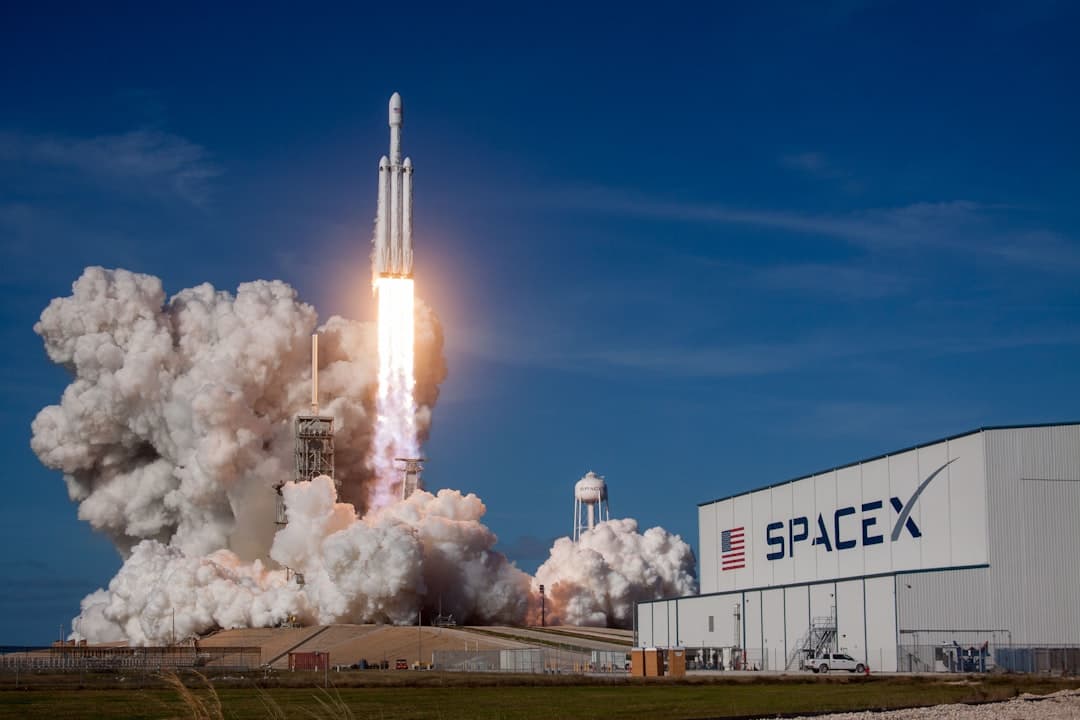
These Gen3 satellites will weigh more than 2,000 kilograms, or over two tons. That means SpaceX won't be able to launch a meaningful number of satellites at once using its workhorse Falcon 9 rockets. Instead, CEO Elon Musk has said SpaceX will need to use Starship , which still isn't ready for prime time. In the meantime, Falcon Heavy rockets would be able to launch sufficient Gen3 satellites to deliver the service.
SpaceX has told the FCC that the Gen3 network is intended to serve not only consumers and enterprises but also government customers and "billions of AI-powered devices worldwide," tying the constellation directly to projected compute and data-transport demands from large-scale AI systems. This is no AI data center in space, but it's a step in that direction.
The application seeks access to an unusually broad span of spectrum, including Ku-, Ka-, V-, E-, W-, and D-band frequencies. Downlink bands cited in the filing include 10.7 to 13.4 GHz, 17.3 to 21.2 GHz, and 37.5 to 42.5 GHz, while uplink bands span multiple ranges up to approximately 231.5 to 275 GHz. SpaceX requests waivers of FCC rules, such as Section 2.106, to assemble larger contiguous channels for high-capacity fronthaul, backhaul, and massive uplink.
Source: ZDNet