US Approves Launch of Mirror Satellite to Reflect Sunlight at Night
FCC authorizes Reflect Orbital to build and operate a mirror satellite in low Earth orbit to reflect sunlight onto specific locations on Earth at night.
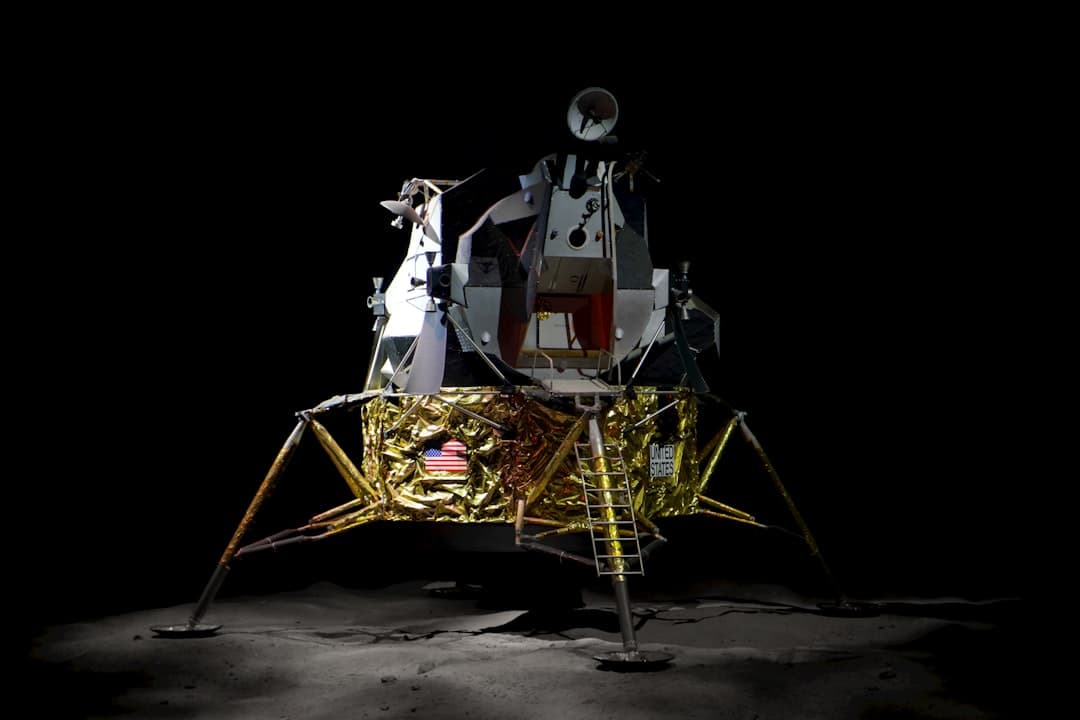
On July 9, the US Federal Communications Commission (FCC) authorized Reflect Orbital to build, launch, and operate a mirror satellite in low Earth orbit. The experimental satellite, named Eärendil-1, would be capable of reflecting sunlight onto specific locations on Earth during the night. The project has long drawn criticism from astronomers and environmental advocates.
WIRED wrote about Reflect Orbital's giant mirror in September 2024, when the project was still in its early stages: “The ambitious goal of the Santa Monica, California–based startup is to ensure a continuous supply of light for large solar panel installations, allowing them to generate electricity even at night and thereby overcoming one of the main limitations of this renewable energy source.” Two years later, the Trump administration has given the green light to this provider of “on-demand” sunlight. Equipped with an 18-meter reflector, Eärendil-1 could illuminate areas 5 to 6 kilometers in diameter for brief periods (the mirror satellite's name is a reference to a character from J.R.R. Tolkien's Lord of the Rings series).
The authorization allows the company to deploy the test satellite at an altitude of about 625 kilometers. Its primary objective is to evaluate the technical feasibility of its ultrathin, highly reflective, film-based reflector. “We're grateful to the FCC for granting our application to fly our test mission,” the company said on social media.
“This ruling is hugely validating for our company and reflects America's leadership in testing innovative space technology.” The US startup argues that this highly controversial technology could have a variety of civilian, commercial, and government applications. These include providing illumination for search-and-rescue operations, supporting critical infrastructure during emergencies, extending productive hours for solar energy facilities, and temporarily lighting remote construction sites without relying on conventional generators. Eärendil-1 would be only the beginning.
Reflect Orbital envisions operating 50,000 satellites by 2035. And that's just one company. If the initiative succeeds, it could give rise to an entirely new global industry—something that is already keeping many people awake, for now at least figuratively.
“Imagine the sky filled with moons,” says Tony Tyson, a researcher at the University of California, Davis and chief scientist for the Vera C. Rubin Observatory. Tyson remains skeptical that these satellites will be able to direct reflected light with the precision the startup claims.
During the regulatory review process, the FCC received nearly 2,000 public comments questioning the proposal. Among its leading critics were the American Astronomical Society, DarkSky International, and the Royal Astronomical Society. These organizations warn about the potential effects such satellites could have on astronomy, nocturnal ecosystems, and aviation safety.
Source: Wired